
Today, I'm really excited to launch Yara, the world's first AI agent for finding a job.
If you are searching for work right now, this is one of the hardest markets we have seen in a while.
In June, the U.S. added just 57,000 jobs, and long-term unemployment was up 286,000 over the year. For recent college graduates, 41.5 percent are underemployed.
When I started talking to people looking for work, the same problems came up: applications vanished into a black hole, fake or expired roles wasted hours, and job descriptions did not match the actual job.
People spend more time researching, tailoring resumes, and re-entering information than preparing for interviews. They cannot tell if their skills fit, and rejections teach them nothing.
Now a wave of tools promises to solve this with mass applications. Most of it is mass-apply slop. Candidates send more. Employers filter harder. Everyone gets more volume and less signal.
What exists to help people find a job has honestly been mediocre. It makes me angry. It is shitty that the answer we have given people is to automate their way through a broken system.
This one is personal to me
My parents immigrated to this country. My dad arrived with an engineering degree and a simple dream: to find work he was qualified for and provide for his family.
He tried tirelessly. He applied for jobs he was qualified for and kept getting passed over. He ended up working as a front desk attendant at a hotel.
That hotel became my first home. As a kid, I thought it was a great arrangement. I did not understand that we lived there because my parents could not afford an actual home.
I did not know we were poor. I did not understand what it meant for a trained engineer to work the front desk because it was the opportunity this country gave him.
The lesson came later. A job can make or break someone's opportunity in this world. It decides where you sleep, whether there is food on the table, and how much of your life is spent fearing money.
I grew up knowing that I could not afford to waste an opportunity. There was too much at stake.
Fast forward to when I was eighteen. I had dropped out of college. I did not have a degree, but I got a job because of my skills and what I could produce.
That job paid me six figures.
For the first time, what I made through my work could cover what my dad was making. I could take care of the people who had spent their lives taking care of me.
Someone gave me a chance based on my work. That chance changed what was possible for my family.
My work could finally give my family room to breathe. That was what relief felt like.
What a job makes possible
This is why I keep coming back to Yara. I want more people to have the same freedom that one opportunity gave me.
A job provides financial freedom. Sometimes that freedom is survival. Sometimes it is the ability to make a choice that used to be impossible.
Maybe it means being able to feed your family.
Maybe it means being able to pay your tuition or go to college.
Maybe it means taking your family to Hawaii after years of telling them you would go when you could finally afford it.
These choices are different in size, but they come from the same thing: having enough control over your finances to decide what happens next.
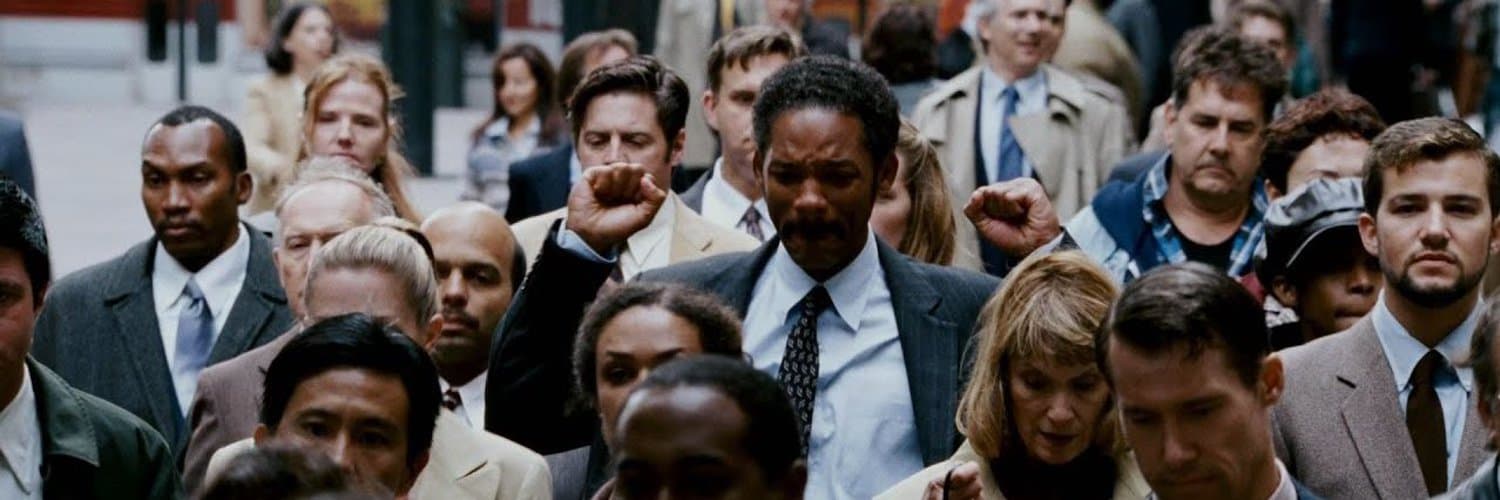
One of my favorite scenes is at the end of The Pursuit of Happyness. Chris Gardner walks into the street after landing the job. The crowd keeps moving around him, but his whole world has changed.
For me, it took eighteen years to reach that same feeling: the liberation of knowing I could finally provide for my family. I want more people to reach their own version of that moment.
Everyone deserves a real chance at work that can give them that freedom.
I have been on both sides
Yara did not appear all at once. I had been thinking about it for years, after seeing hiring from both sides.
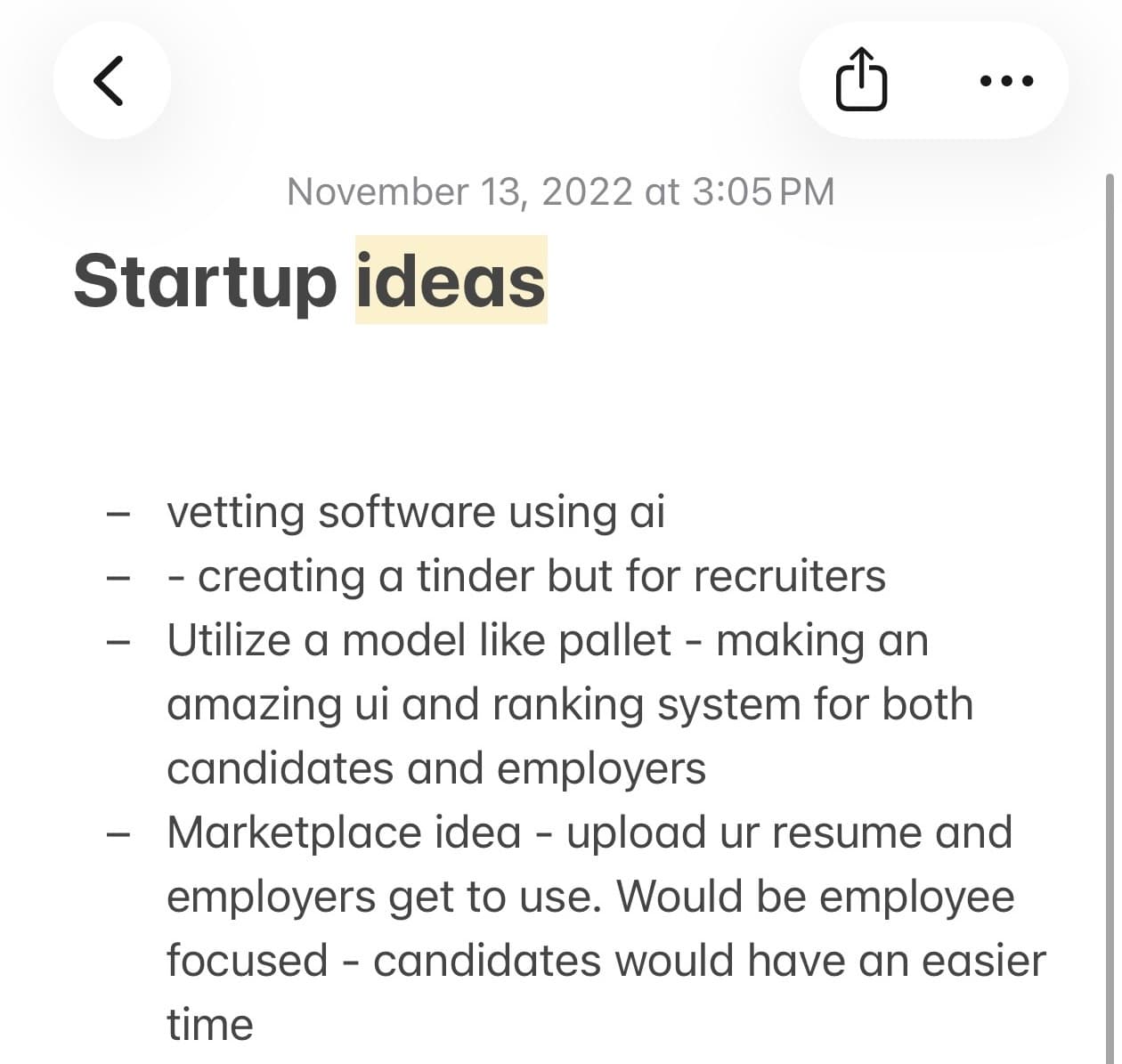 Startup ideas, 2022. Image 1 / 2
Early in my career, I joined a recruiting firm that helped Series A through Series E companies hire engineers and talent. I helped scale that business to seven figures and learned how hiring really worked.
Most of the roles that followed were as a founding Chief of Staff or Head of Operations at venture-backed companies, including companies backed by Jay-Z and Chamath Palihapitiya.
Across those roles, I scaled teams, reviewed more than 30,000 resumes and portfolios, interviewed more people than I can count, and used almost every ATS you can name.
I worked with recruiters and acted as one myself. I spent more than $250,000 on recruiting fees and worked with people from Apple, Meta, Google, Amazon, and BlackRock, along with graduates of MIT.
I have also been the person looking for work. For three or four years, I watched candidates and companies run into the same broken process from opposite sides.
In 2025, I started the first version of what became Yara as a recruiting firm. The point was to work closely with candidates and understand what they actually needed.
I built it because I was dissatisfied with the market. Candidates could not find good work. Companies could not find great talent. Too many vendors made money without making either outcome better.
The first versions, built through 2025 and 2026, taught me that great recruiting was never about sending more candidates.
It was helping someone present their work clearly, understand how the company operated, and prepare to succeed in the interview.
It meant researching the company, the role, and each interviewer before making a match. It meant curating opportunities where someone could actually win.
The difference between a good candidate and a great one was often not ability. It was context, preparation, and the chance to present their work properly.
That high-touch, deeply curated experience was reserved for a small number of people. I wanted to make it available to everyone.
AI is not the end of work
In this new iteration of the world, we are being told that AI is going to replace a lot of jobs.
Some of those jobs will disappear. Pretending otherwise would be dishonest. For the people affected, this is not a debate on the internet. It is whether they can pay rent next month.
But replacement is not the whole story. AI also increases what one person can do. The more important question is whether it creates more freedom than it takes away.
We have seen versions of this before.
Railroads made old kinds of work obsolete. They also created cities, industries, and more than two million railroad jobs by 1920.
U.S. Railroad Employment
1920
The internet did the same thing. It broke a bunch of old businesses. It also created software, cloud computing, cybersecurity, ecommerce, and careers that did not exist before it.
U.S. Tech Sector Employment
2025
From 2003 Low
The Bureau of Labor Statistics projects 267,700 more software developer jobs by 2034. It names AI, automation, robotics, and connected devices as drivers of demand.
History does not say the transition will be painless. It says replacement is only half the story. The other half is the work that becomes possible afterward.
What we are building
More jobs will not fix a system that still cannot see the right person.
My father had the degree and the system missed him. I did not have the degree, but someone gave me a chance based on my work. That difference changed both of our lives.
This is why we built Yara. One system for the entire job search. One agent, one memory, and all the context about what you want, what you have done, and where you have applied.
Yara searches dynamically from your requirements, researches each company, and verifies whether a role is real before asking you to spend time on it.
It can create resumes across different templates and build a portfolio with trackable links, so you can see when hiring managers view your work.
It helps you apply without the repetitive work, prepares you for interviews with company-specific context, and keeps you in control of every decision.
It remembers your applications, connects to your email, schedules follow-ups and tasks, and helps you find and reach the right hiring managers and people.
The important part is what happens between these steps. The agent that found the role already knows your work, your materials, your applications, and the people you have contacted.
Nothing starts from zero. Each step makes the next one smarter. The goal is not 500 more applications. It is giving you the strongest possible chance at the right job.
The thesis behind Yara is simple. Every job platform today is built for employers. Yara is built for you.
The next billion jobs
We are building the infrastructure to power billions of hires. But you cannot reach a billion people by making the old system faster. You have to change who the system works for.
Yara starts with the person, not the application. It learns what someone wants, what they can do, and what kind of opportunity could change their life.
I know what one job did for my family. It gave me the feeling Chris Gardner has in that final scene: the quiet realization that life had changed, and the freedom to decide what came next.
Yara exists so the next billion people can reach work that gives them their own version of that moment.
Yara is the body of work I believe in most. I am committed to bringing it into the world.
Abdullah Atif, Founder at Yara